
What to look for when comparing crypto exchanges in Australia
When we compare an exchange, we start with the things we will actually use: available assets, Australian-dollar funding, total costs, and the clarity of the platform. A polished home page is not enough if withdrawals are awkward or the pricing is difficult to understand. Our aim with a crypto exchange australia compared guide is to make those practical differences easier to see. We should also remember that crypto prices can move sharply, and this is general information rather than personal financial advice.
Supported cryptocurrencies and trading pairs
The right asset list depends on what we plan to buy, sell, or hold. We should check the exact trading pairs, not just a headline number of listed coins, because a token may be available only through a particular conversion route. CoinSpot’s published exchange information says it supports buying, selling, and swapping more than 470 cryptocurrencies, which may suit readers who value a broad selection.
It is still worth checking whether the assets we want can be traded directly against AUD or whether we need to make an intermediate conversion. That extra step can affect the price we receive and the fees we pay.
AUD deposits and withdrawals
Australian users generally want a straightforward route between a bank account and an exchange. We should look for clear information about AUD deposits, withdrawal methods, expected processing times, and whether a bank transfer has any restrictions. A service that accepts money easily but makes the withdrawal process vague deserves closer scrutiny.
We should also confirm that the account name, payment details, and identity information need to match. Small mismatches can delay a transfer, particularly when an exchange is checking where funds came from.
Fees, spreads, and hidden costs
The advertised trading fee is only one part of the cost. We should compare the quoted buy or sell price with the market price, then check deposit fees, withdrawal charges, network fees, and any difference between simple purchase screens and advanced markets. The total cost matters most when we are comparing platforms for repeated use.
A low headline fee can be less attractive if the spread is wider, while a convenient instant purchase may cost more than placing an order on an exchange market. We need to read the fee schedule and the final confirmation screen together.
Mobile apps, desktop platforms, and usability
Usability is not merely about attractive colours. We should be able to find balances, transaction history, security settings, fees, and withdrawal controls without guessing. CoinSpot says its app lets users buy and sell Bitcoin while on the go; that is a specific convenience, but we should still assess whether the app gives us enough detail before confirming a transaction.
We can test this by navigating the platform without depositing money first. If basic information is buried, the same friction may become more stressful when we need to act quickly or resolve an account issue.
How Australian crypto exchange fees really work
Exchange pricing can look simple until we follow one transaction from deposit to withdrawal. The displayed price, trading fee, payment charge, and blockchain fee may all sit in different parts of the platform. We should compare like with like and avoid assuming that the cheapest-looking line item gives us the cheapest overall transaction.
A useful comparison also separates an occasional purchase from frequent trading. The best value for one small purchase may not be the best value for many orders, and convenience can carry a cost that is easy to miss.
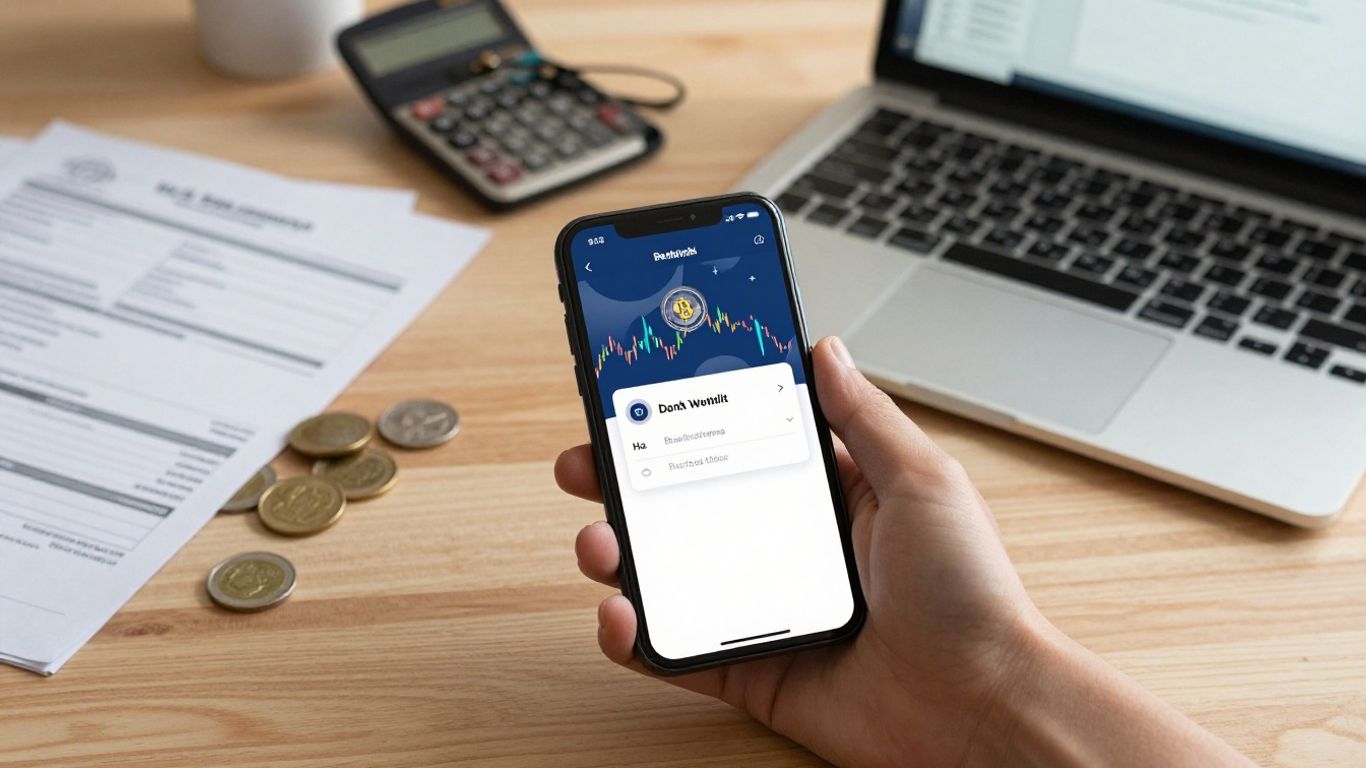
Trading fees versus spread-based pricing
A trading fee is usually shown as a percentage or a fixed charge for placing an order. A spread is the gap between the price at which an asset can be bought and the price at which it can be sold. Some simple buy screens build the exchange’s margin into the quoted price rather than showing a separate trading fee.
We should therefore note the price offered, the amount received, and the fee before confirming. Looking at only one percentage can give us a misleading picture of value.
Deposit, withdrawal, and network fees
Depositing AUD may be free through one method and charged through another. A crypto withdrawal can also include a platform charge, a network fee, or both, depending on the asset and the destination. The final amount received in our external wallet is the figure that matters for comparison.
Fees may change with network conditions or platform policy, so we should check them immediately before sending funds. We should also confirm that the chosen network matches the receiving wallet; a cheap transfer on the wrong network can create a much bigger problem.
Instant purchases compared with advanced trading
Instant purchase tools are designed to reduce steps. Advanced trading screens may provide order books, limit orders, and more control over the execution price, but they can feel less intuitive at first. We should choose based on the way we actually plan to transact rather than assuming that more controls automatically mean better value.
For a small, occasional purchase, simplicity may be useful. For repeated orders, the ability to choose an order type and inspect market depth may make the cost easier to manage, provided we understand what we are doing.
How to estimate your total trading cost
We can make a rough comparison by recording the AUD paid, the quoted price, the explicit fee, and the crypto received. Then we can add any withdrawal cost if the plan is to move the asset elsewhere. This method is more useful than comparing fee labels in isolation because it follows the actual transaction.
The result will not predict future prices, and it is not a recommendation. It simply gives us a consistent way to compare two platforms using the same asset, amount, payment method, and destination.
Security and regulation for Australian users
Security should be assessed before we transfer money, not after something goes wrong. We should examine registration information, account controls, custody explanations, withdrawal procedures, and the quality of warnings around suspicious activity. No exchange removes the underlying risks of crypto ownership, so we should keep our expectations realistic.
Clear communication matters as much as technical language. If a platform cannot explain how to secure an account or why it needs certain documents, we should pause rather than rush through registration.
Australian registration and regulatory oversight
Australian users should check whether an exchange is registered with the relevant local authority for the services it provides and whether its legal entity and contact details are easy to find. Registration is not a promise that prices will rise or that losses cannot occur. It is one part of checking who operates the service and which obligations may apply.
We should read the platform’s terms, privacy information, and risk disclosures. A familiar logo or Australian spelling is not a substitute for verifying the actual business behind an account.
Two-factor authentication and account protections
Two-factor authentication adds a second check beyond a password. Where available, we should consider an authenticator application or another stronger option, use a unique password, and review login notifications. We should also understand whether withdrawals can be delayed after changing security settings.
A platform may offer address whitelisting, device controls, or withdrawal confirmations, but we need to read how those controls work. Security features help only when they are enabled and when we can still access the recovery methods.
Cold storage, insurance, and custody practices
An exchange may describe how it stores assets, but wording such as “secure” or “protected” needs context. We should ask what portion is held offline, who controls the keys, whether insurance applies, and which events are excluded. Insurance, where offered, may not cover every loss or every user balance.
We should also remember that holding crypto on an exchange means relying on that service to safeguard access. Keeping only what we need for a particular purpose on a platform can reduce exposure, while self-custody introduces its own responsibility.
Recognizing scams and risky platform behavior
Scams often depend on urgency, secrecy, or a request to bypass normal procedures. We should treat unexpected messages, guaranteed-return language, and requests for passwords or recovery phrases as warning signs. A genuine support process should not require us to hand over a private key.
A short safety check can help us slow down before acting:
- Open the exchange through a saved or independently verified address.
- Check the recipient wallet address and network on the confirmation screen.
- Contact support through the platform’s official channel, not a message link.
- Keep passwords, one-time codes, and recovery phrases private.
These steps do not make a transaction risk-free, but they reduce the chance that a rushed decision becomes irreversible. We should be especially cautious when someone claims to be helping us recover funds or asks us to send crypto to “verify” an account.
Comparing payment methods and account funding
Funding options affect both convenience and risk. We should compare how an exchange accepts AUD, how quickly deposits become usable, and what happens when a bank transfer is reversed or held for review. The most convenient method is not always the one with the clearest protections or lowest cost.
Before sending money, we can read the payment instructions carefully and make a small test deposit if the platform permits it. That gives us a chance to check the account details and timing without committing a large amount.
PayID and bank transfer support
PayID and bank transfers can be useful because they connect the exchange with familiar Australian banking processes. We should confirm the exact PayID or bank details shown inside the verified account, along with any reference required for matching the deposit.
CoinSpot’s published information describes several deposit methods and a process for depositing funds before trading. We should still check the current instructions ourselves, because payment availability, limits, and processing arrangements can change.
Debit card and other payment options
Card payments may be convenient, but the exchange or card provider may apply separate charges or restrictions. We should check whether the transaction is treated as a purchase, whether the cardholder name must match the exchange account, and whether the method supports withdrawals as well as deposits.
Other options may involve different processing times and verification steps. Convenience should not lead us to skip the final review of the amount, fees, and destination.
Deposit limits, processing times, and reversals
A deposit can be pending even when money has left our bank account. We should look for daily or transaction limits, the cut-off times for processing, and the conditions under which a payment can be returned. Reversals may affect a crypto purchase if the original payment has not fully settled.
Writing down the transaction reference and keeping bank records can make a later query easier. We should avoid sending another deposit simply because the first one has not appeared yet.
Identity checks and source-of-funds requirements
Identity checks are a normal part of many regulated financial services. An exchange may ask for identification, address information, or evidence about the source of funds, especially when activity changes or a withdrawal requires review. We should read the privacy policy before uploading documents and use only the official account portal.
If a request seems unusual, we can stop and contact verified support. We should never email identity documents to an unknown address or share a login code to speed up a review.
Which crypto exchange features matter for different users
There is no single feature set that suits everyone. Someone buying occasionally may care about a clear purchase flow, while an active trader may need order controls and detailed market information. We should begin with our own habits, time, and comfort level rather than choosing a platform because it lists the most features.
More features also mean more opportunities to misunderstand a transaction. A simple interface can be a strength when it presents the important information plainly.
Beginner-friendly buying and recurring purchases
A beginner-friendly service should explain the asset, price, fee, and final amount before we confirm. Recurring purchases can add convenience, but we should understand the schedule, cancellation process, funding method, and price used for each transaction.
We should not confuse automation with safety or profit. A recurring instruction continues until we change or cancel it, so checking the settings and account balance remains part of using it responsibly.
Advanced charts, order types, and trading tools
Advanced tools can include charts, market depth, limit orders, and stop-related controls. Each one changes how an order may execute, and some may require us to monitor the market more closely. We should learn the difference between a market order and a limit order before placing either.
The right question is not whether a platform has the longest feature list. It is whether we can use its controls accurately and understand what happens if the market moves quickly.
Staking, earning products, and their risks
Staking and earning products can involve lock-up periods, changing rates, third-party arrangements, and additional platform or network risks. We should read the product terms, including what happens if withdrawals are paused or the underlying asset loses value.
A displayed yield is not the same as a guaranteed return. We should also check whether the asset remains available to withdraw and whether any tax or reporting implications need independent consideration.
Self-custody withdrawals and wallet compatibility
Moving crypto to a wallet we control changes who is responsible for access. We need to check the wallet address, supported network, memo or tag requirements, minimum withdrawal amount, and final fee. A transfer cannot usually be undone after it is confirmed on the network.
A small test transfer can be sensible when we are using a new wallet or network. We should keep recovery phrases offline and never share them with an exchange employee, support agent, or anyone else.
How to compare leading crypto exchanges side by side
A side-by-side comparison works best when every platform is tested against the same questions. We can record the details in a simple worksheet and revisit it after reading the fee schedule and withdrawal page. This keeps a persuasive landing page from becoming the only evidence we use.
We should also separate facts from preferences. Fast support may matter more to one reader, while another may prioritise direct AUD access or a particular wallet network.
Build a comparison table around your priorities
A table can make trade-offs visible, as long as we fill it with comparable information rather than vague ratings. We might use categories such as the following before opening an account:
| Comparison point | What we check | Why it matters |
|---|---|---|
| AUD funding | Available methods and timing | It affects how easily we can enter and exit |
| Total cost | Trading price, fees, and withdrawal charges | It shows the likely cost of a real transaction |
| Asset access | Exact coins and trading pairs | It prevents surprises after registration |
| Account security | Two-factor authentication and withdrawal controls | It helps us assess basic protections |
The table is only a starting point. We should fill in current details from each platform and note the date checked, because fees, supported assets, and payment methods can change.
Test customer support and platform transparency
Before depositing, we can ask a straightforward question about fees, a payment method, or a withdrawal. We should notice whether the answer is specific, easy to find, and consistent with the published terms. Vague replies and pressure to act quickly are reasons to slow down.
We can also check whether the platform clearly identifies its operator, provides risk information, and explains account restrictions. Transparency is useful when everything works and even more useful when something does not.
Check asset availability and liquidity
Asset availability is only half the question; we should also consider whether there is enough market activity for an order to execute near the displayed price. Thin trading can mean a wider spread or more price movement between placing and completing an order.
We should check the actual market or conversion screen for the asset and amount we intend to use. A large catalogue does not automatically mean every asset has the same ease of trading.
Review withdrawal policies before depositing
Withdrawal rules can include minimum amounts, identity reviews, network restrictions, cooling-off periods, and daily limits. Reading these conditions first helps us avoid choosing a platform that cannot support the wallet or timing we have in mind.
We should confirm how the exchange handles a pending withdrawal and where to find the transaction ID. If the policy is hard to locate, that is itself useful information for our comparison.
Making a safer choice for your crypto goals
Once we have compared the practical details, we can choose the platform that fits our intended use rather than chasing a universal winner. We should keep the amount we use within what we can afford to lose and remember that crypto markets can be volatile. No checklist replaces careful account security and a clear understanding of each transaction.
A calm decision is usually better than an urgent one. We can start small, test the process, and change course if the platform does not remain clear or reliable.
Choosing an exchange for occasional investing
For occasional use, we may value transparent pricing, simple AUD deposits, a clear purchase confirmation, and dependable withdrawals. We should not pay for advanced features we will never use, but we should still check the total cost and security controls.
A small test transaction can show whether the platform’s instructions make sense from deposit through to withdrawal. That practical experience often tells us more than a long feature list.
Choosing a platform for frequent trading
Frequent trading makes execution price, liquidity, order types, and fee structure more significant. We should practise with the interface, understand the order controls, and review how fees are calculated at the volume we expect.
We also need a plan for access and security. Frequent activity can create more login events, transfers, and records to monitor, so strong account habits matter.
Balancing convenience, cost, and control
Convenience can save time, while control can help us inspect prices and manage withdrawals. Neither is automatically better. We should decide which trade-off we are comfortable making and then compare the full transaction cost, not only the advertised fee.
If we cannot explain how an exchange makes money from our transaction, we probably need to read the pricing information again. Clear understanding is more valuable than a fashionable feature.
When to use more than one crypto service
Using more than one service may separate buying, trading, and self-custody, but it also creates more passwords, records, and security responsibilities. We should have a clear reason before opening another account and keep track of which service holds what.
More accounts do not automatically reduce risk. They can make sense when each service has a distinct, understood purpose, but simplicity is often easier to secure.
Conclusion
Choosing a crypto exchange in Australia is less about finding a perfect platform and more about comparing the details we will live with: AUD funding, total fees, asset access, security controls, support, and withdrawals. We can move slowly, verify each claim, and test the process with a small amount before committing further. That approach will not remove market risk, but it can help us make a clearer and safer choice.